Monday, May 28, 2007
University procedure for fires includes wheelchair policy
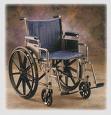
Portland State University student and wheelchair user Heather Brooks was left stranded at the top of a flight of stairs last month when a fire alarm sounded. Elevators shut down, leaving stairs as the only exit. Students and professors didn't know how to get Brooks out of the building, and they eventually carried her, according to an article in Portland State's Daily Vanguard. The event raises questions on proper wheelchair user procedures during a fire. University of Oregon officials said that campus and city emergency agencies know how to respond to similar situations and said proper policies are in place. Most campus elevators will open to the lowest floor possible without smoke. Wheelchair users are advised to retreat to a stairwell because such areas are typically protected from fires.


Tuesday, May 1, 2007
We owe it to injured soldiers to make their lives as normal as ...
Flying flags and putting ribbons on our cars to support our troops are good, appropriate things to do. But isnt it time we really do something to help them? More than 20,000 soldiers are coming home injured, some without either leg. Dont we owe it to them to make their lives as normal as possible?
Many handicapped parking spaces are only normal-size spaces. The Americans with Disabilities Act states they must be 96 inches wide, to make room for wheelchairs and lifts. The diagonal lines between such spaces are not for shopping carts or cars, even if you have a handicapped placard. It is part of the space they need.
Handicapped placards and license plates are only for the person whom a doctor specified on a form. If you are driving and are not that person, or if that person is not getting out of the vehicle, you are illegally parked.
Many handicapped parking spaces are only normal-size spaces. The Americans with Disabilities Act states they must be 96 inches wide, to make room for wheelchairs and lifts. The diagonal lines between such spaces are not for shopping carts or cars, even if you have a handicapped placard. It is part of the space they need.
Handicapped placards and license plates are only for the person whom a doctor specified on a form. If you are driving and are not that person, or if that person is not getting out of the vehicle, you are illegally parked.
Tuesday, April 17, 2007
Money from 600,000 Americans builds center meant to help severely wounded troops rebuild lives
Some limped gingerly, some rode in wheelchairs as they made their way into the tent. They had missing arms and legs, faces with no ears or with rebuilt noses, bones rebuilt with steel, shrapnel still visible in places.
They are the faces of war and its cruel costs, the "wounded warriors" as they were called Monday, and they were the guests of honor at the dedication of a $40 million rehabilitation center built just for them.
One of those soldiers is Spc. Lucas Schmitz, a 22-year-old college student from rural Minnesota, whose right leg was blown off by a bomb in Iraq last July.
"The center will give me the opportunity to adapt," said Schmitz, a member of the Minnesota National Guard. "I'm never going to be the same, and I won't be able to do things exactly like I used to.
They are the faces of war and its cruel costs, the "wounded warriors" as they were called Monday, and they were the guests of honor at the dedication of a $40 million rehabilitation center built just for them.
One of those soldiers is Spc. Lucas Schmitz, a 22-year-old college student from rural Minnesota, whose right leg was blown off by a bomb in Iraq last July.
"The center will give me the opportunity to adapt," said Schmitz, a member of the Minnesota National Guard. "I'm never going to be the same, and I won't be able to do things exactly like I used to.
Tuesday, April 10, 2007
Empathy lesson puts students in shoes of disabled
It's hard to tie your shoes with your fingers taped together. It's even harder to use scissors with your elbows. Now try working a puzzle with double vision.
Students encountered such scenarios this week during "Come Walk in My Shoes" at Menlo Park Elementary in Northeast Portland in the David Douglas School District. The one-day event offered lessons in empathy for those with learning and physical disabilities, and language barriers.
In one exercise, students sat in wheelchairs and pushed themselves over thick carpet -- while carrying lunch trays on their laps. Most students dropped their lunches, and many couldn't help but use their legs. "My hands are already getting tired," one student said as she wheeled herself up a low ramp.
At a station simulating what it's like to have dyslexia, students were asked to read pages with improper word spacing and backward letters.
Students encountered such scenarios this week during "Come Walk in My Shoes" at Menlo Park Elementary in Northeast Portland in the David Douglas School District. The one-day event offered lessons in empathy for those with learning and physical disabilities, and language barriers.
In one exercise, students sat in wheelchairs and pushed themselves over thick carpet -- while carrying lunch trays on their laps. Most students dropped their lunches, and many couldn't help but use their legs. "My hands are already getting tired," one student said as she wheeled herself up a low ramp.
At a station simulating what it's like to have dyslexia, students were asked to read pages with improper word spacing and backward letters.
Subscribe to:
Posts (Atom)